
Finding Montgomery County Residents
No single public list names every person in the county. That is why the Montgomery County residents directory exists. It starts with the record that fits the question. A known address belongs in the property roll first. A known name fits a court index, an estate index, or a licensed professional record. Names from decades past appear more often in a printed directory, a census schedule, an obituary, a cemetery card, or a deed. They appear less often in a current parcel card.
Anchor your search to the detail least likely to change. A street address or parcel account number makes the strongest starting point. Full names demand more caution, because identical names crowd public indexes. Property records show assessed ownership and a tax mailing address. But they miss people who simply live at a location. Court and voter tools carry their own limits. Always read the field labels and coverage notes before concluding anything.
- Search the address in Maryland SDAT and record the owner, situs address, mailing address, and PAN account identifier.
- Use that PAN or a recorded party name in MDLandRec to locate deeds and earlier transfers.
- Check Maryland Judiciary Case Search only as an identity cross-check, then obtain a needed file from the clerk.
- For a past household, compare the nearest directory year, census year, obituary, and cemetery or probate record.
- Send a focused Maryland Public Information Act request to the custodian when an existing nonconfidential record is not online.
Note: A record trail can show ownership, filing activity, or a historical connection, but it never accounts for every member of a household.
Montgomery County Resident Records Offices
Several offices give the Montgomery County residents directory its reach. The Circuit Court campus in Rockville anchors land records, case files, probate, and marriage-related work. Maryland SDAT keeps the statewide parcel roll. The State Board of Elections runs the voter self-service lookup. Each office holds a different kind of record under different search rules, so keep every address, case number, or estate number tied to the source that created it.
Circuit Court Land Records
50 Maryland Avenue, North Tower Room 2120
Rockville, MD
240-777-9477
Maryland SDAT
Statewide real-property database
Montgomery County selection
Local assessment terminals are available
Maryland State Board of Elections
State registration lookup
Known-voter identity fields required
Protected fields are withheld
Courthouse computers in the public room allow viewing and copying of land records. The Maryland State Archives holds the historical index and equity material, while the Circuit Court manages current files and certified copies. For a specific address, the full Montgomery County by-street records path keeps the property and deed steps in one place.
Montgomery County Address Records
Start with SDAT when an address is all you have. Its published instructions permit searches by address, street name, account identifier, and map reference. Owner name, ZIP, town, neighborhood, subdivision, and general community labels are not accepted as property-search keys. Drop directional and suffix abbreviations. Use the full street name. If the first search fails, try a trailing asterisk or leave off the number. A successful parcel card then bridges current property details to a land record.
| SDAT field | Use in Montgomery County | What follows |
|---|---|---|
| County | Select Montgomery, county code 16 | County-specific account context |
| Street number and name | Use official syntax; a wildcard can broaden a street | Parcel-card result list |
| Account or PAN | Use an identifier from a prior parcel or tax source | Direct parcel connection |
| Map reference | Use a reference from a prior record | Mapped property context |
A parcel card can display the assessed owner, mailing address, situs address, assessment, sales context, and account data. The situs is simply where the parcel sits. The mailing address is where assessment notices go, and the two often differ. Treat that difference as a lead, not as proof anyone lives there now.
Current Montgomery County Resident Directories
Current sources are partial rolls serving different purposes. The property roll carries assessment and title information. MDLandRec names the people in recorded documents. A voter can retrieve their own registration result. This works when the identity fields match. Business and professional records reveal a public affiliation rather than a home connection. The Association Finder can identify the civic or common-ownership organization behind an address. Use each as a narrow source. Then compare dates and addresses.
| Montgomery source | What it can show | Custodian | Access path |
|---|---|---|---|
| SDAT property roll | Assessed owner, parcel, mailing and situs fields | Maryland SDAT | Free address, PAN, or map search |
| MDLandRec index | Recorded grantors, grantees, document references | Circuit Court / Archives | Free login and courthouse computers |
| Voter self-service lookup | Registration and polling information for a matching voter | State Board of Elections | Known identity fields required |
| Business and license tools | Resident-agent, principal-office, or license-status affiliation | SDAT and Maryland Labor | Free online search routes |
| Association Finder | Relevant civic or HOA contact | Montgomery Planning | Interactive address or map query |
To confirm one particular person across those record types, follow the focused Montgomery County resident lookup sequence instead of treating a single listing as final.
Montgomery County Court Name Records
Maryland Judiciary Case Search is a statewide summary index. It covers Circuit and District Court matters, certain judgments and liens, and estate indexes. Montgomery Circuit civil data starts in 1978; criminal data starts in 1979. A Party Search defaults to an exact name. For a broader last-name search, type the first character followed by a percent sign. Then narrow the results by first name, court, county, case type, status, or filing date. The search caps at 500 results.
Each result can include the case number, indexed name, date-of-birth field, party type, court, case type, status, filing date, and caption. A detail view adds city or state, trial date, charge, disposition, and event history. Protected, sealed, juvenile, shielded, and expunged material never appears. For complete files, Central Files at the Montgomery Circuit Court is the route. Staff prefer a case number, and non-certified copies may arrive through ShareFile after payment.
Check the county's case viewing and copies instructions before requesting anything. That county page also shows the case-number emphasis in its request steps.
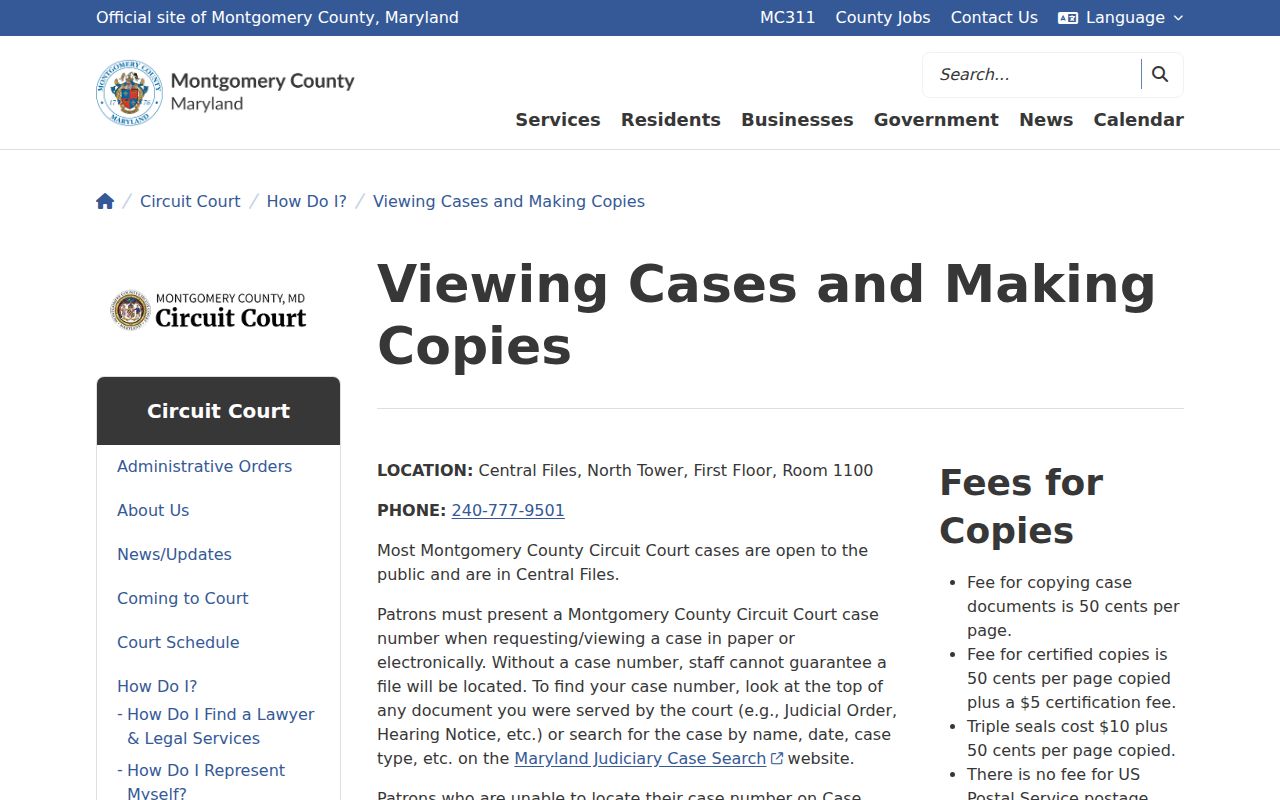
A court summary can separate similar names, but the clerk-held file remains the source for documents, exhibits, or a certified copy.
Montgomery County Voter Lookup Limits
Maryland's voter lookup is built for one voter at a time. It asks for a first and last name, full date of birth, and five-digit ZIP. It also wants a street number. An optional middle initial can narrow things further. A match returns registration status, polling place, districts, and local board. It also shows ballot status and a sample ballot. The field combination is deliberate, and it blocks casual block-by-block roster building in Montgomery County. Protected contact information stays withheld. That barrier is intentional in design, so the system is not a countywide street list.
Maryland Election Law allows inspection of voter-registration records. Protected categories and confidentiality rules still apply. A statewide or local list needs a separate request for a qualified electoral purpose. Published fees and restrictions are attached. A Safe at Home participant's actual address stays sealed. The same goes for a voter with a confidentiality request on file. Use the exact known-voter check where it is permitted. Skip attempts to assemble a block roster.
Note: A missing voter result can reflect a field mismatch, a protection rule, or a registration change rather than a conclusion about a person.
Montgomery County Estate Records
Estate records tie a decedent to a personal representative. An estate file adds an estate number and proceeding dates. Maryland Judiciary Case Search runs a separate probate and estate mode. A name, county, or date range narrows it. A wildcard after a surname broadens things. A deed or obituary may point to an estate. It can leave the file number out. The wildcard helps then.
The Montgomery County Register of Wills holds permanent proceedings. The office sits at 50 Maryland Avenue, Room 322, in Rockville. Written or in-person requests serve as the fallback. Pair the estate index with the land trail, obituaries, and cemetery references. Montgomery County family connections firm up that way, without treating a surname alone as proof.
- Parcel
- A mapped unit of real property with an assessment account or other identifier.
- Index
- A finding tool that points to a record; it is not always the full document.
- Grantor and grantee
- The recorded giver or seller and receiver or buyer named in a land document.
- Criss-cross directory
- An address-first directory section that can point back to a named household in a historical volume.
Montgomery County Vital Record Limits
Vital records in Maryland answer specific questions. They are not a broad name-search system. The Division of Vital Records issues recent birth and death certificates. It also provides marriage certificates and divorce verifications for events from 2007 forward. The Montgomery County Health Department handles local birth and death service by appointment. A divorce decree stays with the Circuit Court that granted it. Older archival material follows its own access rules.
Birth records stay restricted for 100 years or until the named person dies. Death records open at the Archives after 10 years under the current definition. Marriage and divorce material is unrestricted once it reaches archival holdings. Recent certificate requests still go through the Division. Expect to show identity, relationship, direct-and-tangible-interest evidence, or proof of death. When a current certificate is closed, Montgomery History abstracts, cemetery cards, newspapers, and probate records offer other ways to trace the person.
Montgomery County Library Resident Trails
The Jane Sween Research Library at Montgomery History is the fallback. A modern index ends there. Its appointment-only, non-circulating collection spans early wills, marriages, land records, tax assessments, census copies, maps, and newspapers. Oral histories are included too. Cemetery cards sit there as well. The index covers 111 cemeteries and family burying grounds. Past Perfect Online opens over 1,100 described collections and items. More than 14,000 photographs are digitized.
Montgomery County Public Libraries adds cardholder genealogy tools. Newspaper access and local-history referrals come too. Its 2025 report noted new My China Roots and African-American Heritage resources. For Rockville history, the Lincoln Park History Project links family, church, and school material. Civic and neighborhood material comes too. These sources shine for family-history questions that a current property or court index cannot answer. Start with Montgomery History's collections overview to pick the right reading-room material. Then schedule an appointment.
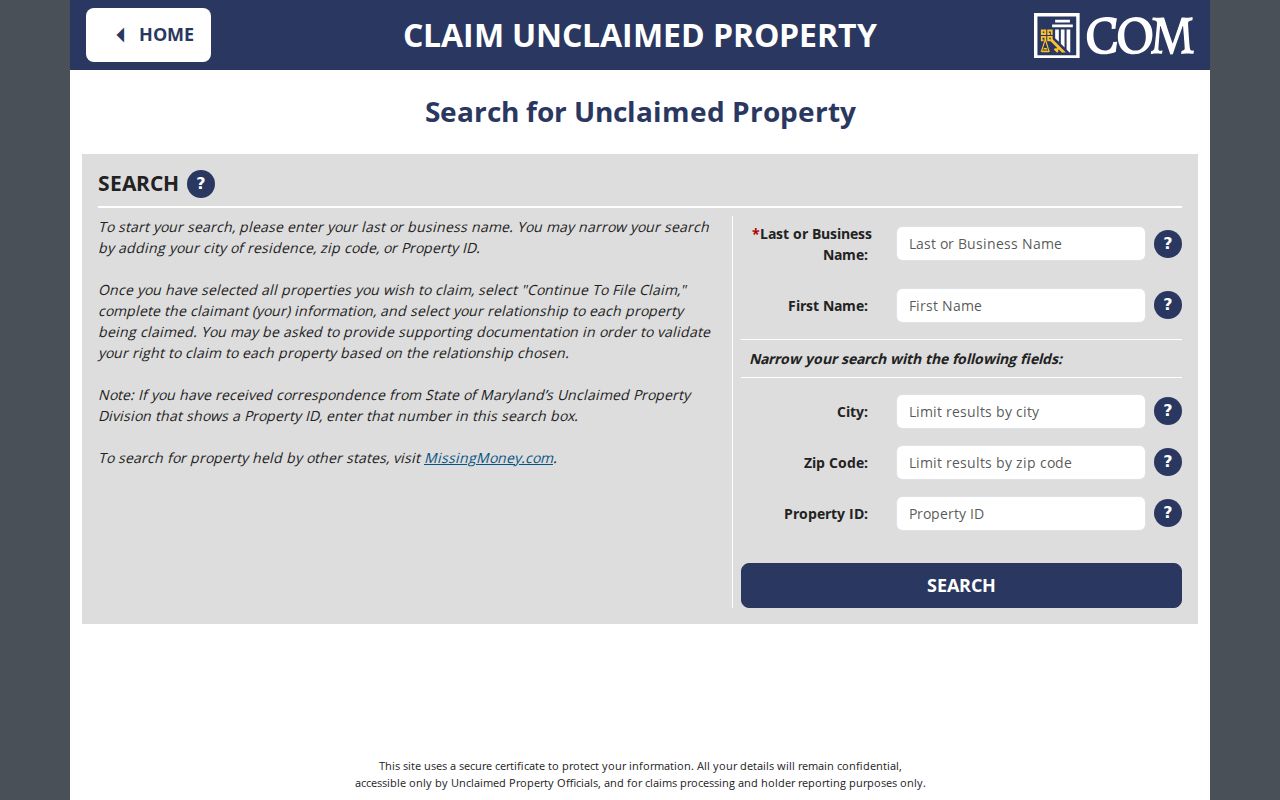
Maryland's free unclaimed-property name search can supply a family lead. Claim verification requires documentation, though, and should run only through the Comptroller's official route.
Historic Montgomery County Resident Directories
Historic directories for Montgomery County survive in patches rather than as one long series. The Silver Spring Historical Society guide catalogs Nelson's Washington Suburban Directory for 1912, 1916, 1917, 1918, and 1923. It also lists Polk's Washington Suburban volumes for 1927-28 and 1930-31, Polk's Silver Spring books in selected years from 1954 through 1973, and Silver Spring Community Phone Books from 1995 forward. Peerless Rockville contributes Polk runs for Rockville covering 1958, 1959, 1961, and 1968-1976. Together these shelf collections form the backbone of any past residents search in the county.
An alphabetical entry in a city directory can give a name, occupation, business tie, residence, and a note on the household. The reverse, or householder, section flips that around. It starts with an address and works back to a name. Coverage is uneven, though. One documented Silver Spring run leaps from 1931 to 1960, leaving a gap that deeds, assessment records, census schedules, newspapers, and maps must fill. For a fuller walk through these volumes and their entry format, see the Montgomery County city directories collection.
Montgomery County Sentinel Trails
Newspaper trails and official records work best side by side. The Montgomery County Sentinel began publishing in 1855. It continued through 2020. Digitized issues from 1855 to 1963 sit on Chronicling America and Maryland Digital Newspapers. Later coverage splits. 1964 to 1969 is searchable on reading-room computers. 1970 to 2020 lives on microfilm at Rockville Memorial Library. Montgomery History rounds out the trail with genealogy abstracts, general abstracts, and obituary clippings.
An obituary can carry real leads. It may name a residence, surviving relatives, a funeral home, a church, or an estate. Confirm each clue against a probate, land, cemetery, or vital record. That step matters most when a city directory stops or a household disappears between editions. A newspaper points toward the custodian's record. It never substitutes for it.
Maryland's professional license search plays a different part in a Montgomery County residents directory hunt. Its universal last-name search can corroborate a public professional affiliation. Profession-specific searches can do the same. It cannot prove a Montgomery County address on its own.
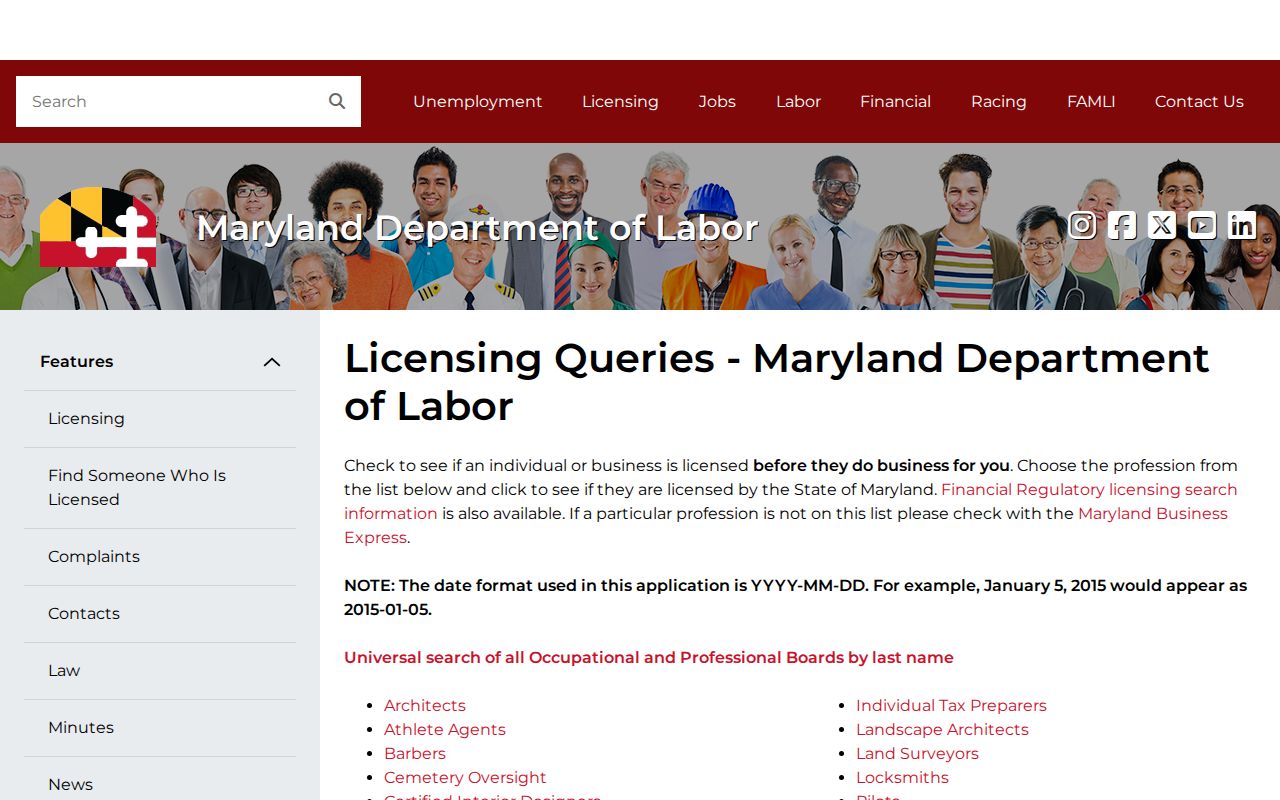
A single matching name proves little. Pair it with a second local record, such as an address-based parcel card, a court record, or an archival source tied to the license form.
Montgomery County Record Sources Compared
Official Montgomery County and Maryland sources do more than list data. They state coverage, field limits, and the correction route. Some require a specific address or identity details. Others require an account, a formal request, or an in-person visit. Commercial people-finder summaries can merge old addresses. They can also omit protected records or blend people with similar names. Treat them as starting hints; a document from the named custodian confirms the record.
| Source type | Best use | Important limit |
|---|---|---|
| Official index | Locate a particular parcel, filing, case, or archive item | May be a summary rather than the complete record |
| Custodian copy or reading room | Inspect the underlying document and request a certified copy when available | May require a fee, appointment, or case number |
| Commercial summary | Generate leads for independent verification | Can be stale, incomplete, or match the wrong person |
Note: Preserve the record number, source date, and a copy of any result so an error goes to the agency that created it. Good paperwork speeds every correction.
Protected Montgomery County Addresses
Maryland public access has firm boundaries. The Maryland Public Information Act opens existing nonconfidential records. Yet it never forces an office to build a new list. Statutes, court rules, medical privacy, adoption rules, and safety programs still shield certain material. Maryland Safe at Home gives an eligible participant a substitute address with mail forwarding. The Board of Elections runs its own confidentiality request process for voters. It serves those facing a safety threat or serious invasion of privacy.
Use these record sources for family history, estate work, civic transparency, reconnecting, and personal safety research. Never use a name, address, registry location, or map result to watch, intimidate, or harm anyone. A current record may be incomplete by design. A historical record may be wrong or simply out of date. Weigh each one carefully.
The Maryland Sex Offender Registry has its own public-use warning and daily-update notice.
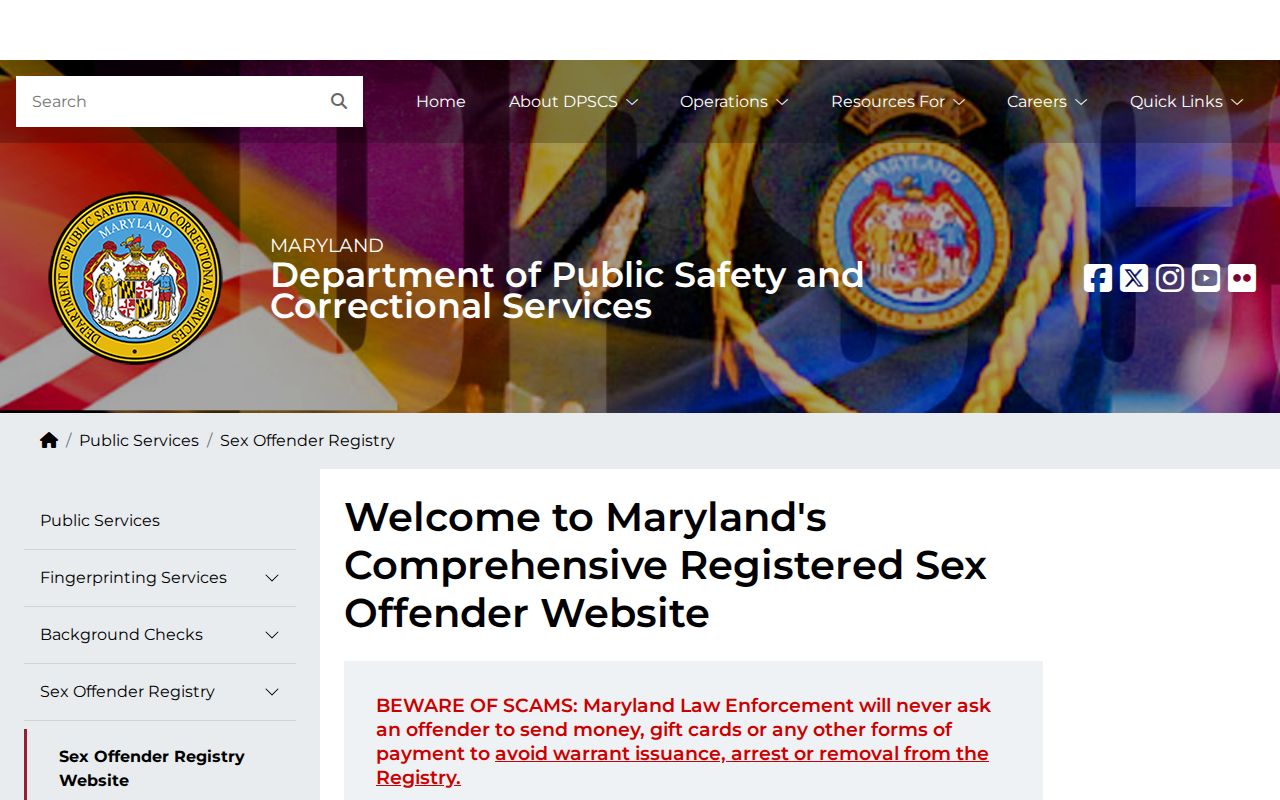
Registry information alone is not positive identification. When a safety concern needs confirmation, check through the official agency or local law enforcement.